CHAPTER SEVENTEEN
Translated from Uzbek · Original text
CHAPTER SEVENTEEN
ORPHANS
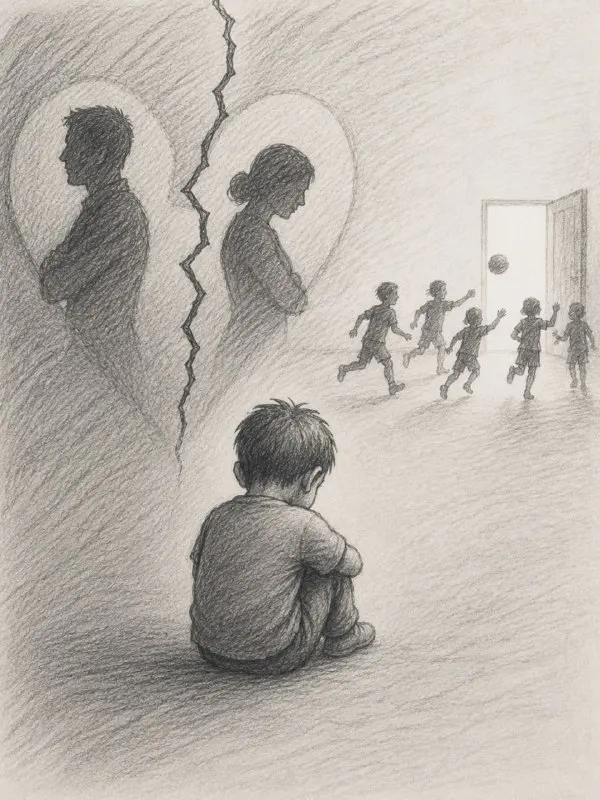
Imagine: a group of children are playing and chattering. Their voices raise the whole world up on its head. They squabble over something, jump about for no reason, and so on. But among them one child silently hangs his head; no, he plays too, but his smile is broken. His courage is low. Something is missing for him.
Then suddenly the children run off shouting, “Daddy! Dad!” But that child does not run anywhere. He looks on with wide, helpless eyes like a wounded fledgling. Because he knows that running would be useless. Because he understands well that his dad has not come. Because he has no dad. Well, if only he truly had no dad – but his mom and dad have divorced. First they shouted and screamed; perhaps his dad hit his mom, perhaps he did not; then his mom, weeping and sobbing, called someone. A little later his grandfather and grandmother came and, saying, “Our daughter is not one to be left out on the street!”, put their daughter and grandson in the car and took them away. And with that, the gossip about the child's father began in that household. The conversations were only about his cruelty and wickedness.
The child may not remember these things, or perhaps he does. But when he came of age, his dad was not there. At home there was his uncle, his grandfather, his grandmother, but no dad. Strange: everyone had a dad, but he had none.
The child grew up. He went to school. People said his dad was not around and his mother was divorced. Children's dads came to pick them up from school, but his dad never came. His mom worked to make a living, and because of that she could not find time for her child, because she had a lot of work.
Loneliness, it turns out, is a bad thing – because his mother was unmarried, men kept making advances to her, and in the end one of them married her. The child was very afraid of going to the new “dad's” house. He went, willy-nilly. Because of the new “dad's” scowl, his mother would put him to bed early and do her best not to upset the new “dad.”
And the child grew up with his head drawn into his shoulders. In the end it would not do; asking himself how long he would go on like this, he set himself free. He became someone who feared nothing. He went wherever he wanted and came back whenever he wanted, and never listened to his mother at all. Little by little, even his longing for his dad faded. He no longer knew at all that there was such a thing as the affection of a person called dad.
According to the latest news, he got mixed up in some brawl and was stabbed, but once he recovered they charged him anyway and locked him up; he was just eighteen at the time. Almost everyone talked about how he had grown up without a father and was ill-bred, but no one remembered the parents who could not bear the hardships of family life, nor the old man and old woman who heroically put their daughter and grandson in the car and drove off, and who are now worn out with grief. No one had said back then, “Oh, my children, don't quarrel, make peace, live in harmony!” – and no one reflected that it was because these words were never said that this family fell apart.
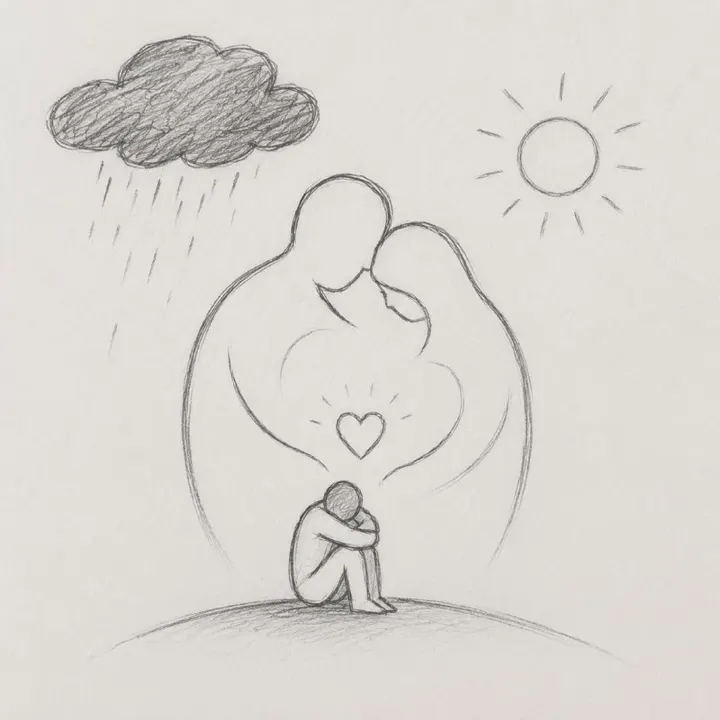
Orphans are of two kinds: true orphans and living orphans. God Himself keeps the true orphan under His protection, but the living orphan is a wretched orphan. The living orphan is the victim of a crime committed by selfish and ill-bred, impatient and thoughtless adults.
The true orphan is fate. Dealing with an orphan is hard. Because his heart is delicate. One word does not satisfy him, half a word is not enough for him. He almost always lives with sobbing in his heart. Over the years his wound may even turn him into a person without affection. An orphan has no hot meal, no soft bread, no clean clothes, no wide bed. What he has are tearful eyes, a sobbing heart, stooped shoulders, a bowed head and a bitter past.
For the one who feeds an orphan, educates him and brings him up – that orphan is his Paradise. For there is no hardship in the world like raising an orphan.
Our only word in this chapter: do not make a child a living orphan! Have mercy on your child!
Akrom MALIK
Comments
No comments yet. Be the first.