Chapter Eight
Translated from Uzbek · Original text
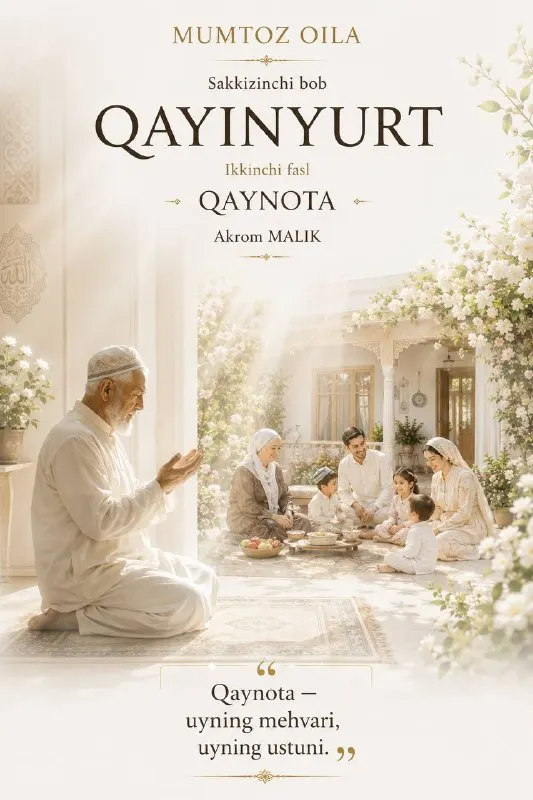
Chapter Eight
THE IN-LAWS
Section Two
The Father-in-Law
The father-in-law hardly communicates with the brides. Because his status is very high, there is a veil between him and the brides. This veil must never be lifted, and no harm must ever come to it. The father-in-law is the most venerable person in the family. His word weighs as heavy as a mountain. His glances, his presence, his voice put down all disputes; his judgment is accepted by everyone without a word. To reach this level, there must be nothing said that contradicts the father-in-law's prestige. The father-in-law always moves about composed and calm. He spends most of his time in worship and useful work. He never busies himself with needless things. The brides must never see the father-in-law in an awkward state or hear needless words from him. The father-in-law listens to everyone. In his presence everyone thinks and chooses their words before speaking. Then the father-in-law says one thing, and everyone obeys him. The father-in-law is a man with a faint smile and a dignified bearing, who is not hasty in punishing, who knows the measure in compassion, and who acts in keeping with his own worth and stature. It is best if he goes to the mosque for every congregational prayer. The father-in-law is the axis of the house, the pillar of the house. Everyone sets themselves right by looking at him; plans are made and directions are set by looking to him. The father-in-law is the protector of the brides. When he hears the mother-in-law's complaints, he calls her to be broad-minded, patient and grateful; he never settles important matters and problems in front of the younger ones. He does not speak harshly to any of his brides, nor does he pamper them; rather, he says a kind word to them. If fathers-in-law fulfill their duty properly, do not allow the mother-in-law's wrong actions, and, should a mistake occur, correct it with justice and firmness; if they always stand on the bride's side, and at the same time, when a fault is seen in the bride, make it known not themselves but through their old wife or their son, then the family will be peaceful and strong. If the father-in-law is offended by the brides, it befits him not to show it, to keep silent, and, because of being offended, to keep himself even more distant from the bride. Then the bride, with her own discernment, will find her mistake herself and try to correct it. The father-in-law never sits at the same dastarkhan with the brides; this is contrary to his status. The father-in-law sits separately with his sons and grandchildren. Today, brides regarding their father-in-law as a pal, greeting him with kisses, and other ill-mannered, excessive behavior are contrary to the order of the classical family, and as a result the father-in-law loses the right and the possibility to fulfill his role in the family properly. This must not be allowed.
Akrom MALIK
Comments
No comments yet. Be the first.